Weightlifters’ elbow
This condition often involves strain or tearing in the forearm muscles, most commonly the brachioradialis, and is sometimes triggered by heavy reverse curls or similar heavy lifting movements. Pain is usually felt on the outside of the elbow, even though the problem may actually be coming from the forearm muscles themselves. This happens because pain can be referred from one area to another, which can make the elbow seem like the source when it is not.
Treatment is usually aimed at calming the irritated tissue, restoring movement, and gradually rebuilding strength. Manual therapy techniques such as Graston therapy may be helpful in some cases, especially when scar tissue or stubborn soft-tissue tightness is present. ArmLock is generally not intended for this type of injury.

Racket sport induced tennis elbow:
Racket sports can place substantial stress on the tendons at the outside of the elbow. Repetitive, forceful movements may overload the tendon, causing irritation, breakdown, and pain. When the tendon is acutely inflamed, rest is usually more appropriate than stretching.
Because many athletes continue to play through pain, the tendon may not have enough time to recover. In these cases, a counterforce brace may help reduce stress on the elbow, but the underlying tissue still needs time to heal.
ArmLock may be more suitable once an adequate rest period has occurred, typically at least 6 weeks.

Repetitive strain tennis elbow (gripping, squeezing, pinching, or holding fingers over a key board).
Sometimes the muscles on the back of the forearm become tight, overworked, and irritated from repeated gripping or holding tasks. When these muscles stay contracted for long periods, blood flow can be reduced in the smaller vessels inside the muscle, which may create a kind of local “energy shortage” in the tissue. Over time, this can contribute to sore spots, tight bands in the muscle, and pain that may be felt at the outside of the elbow.
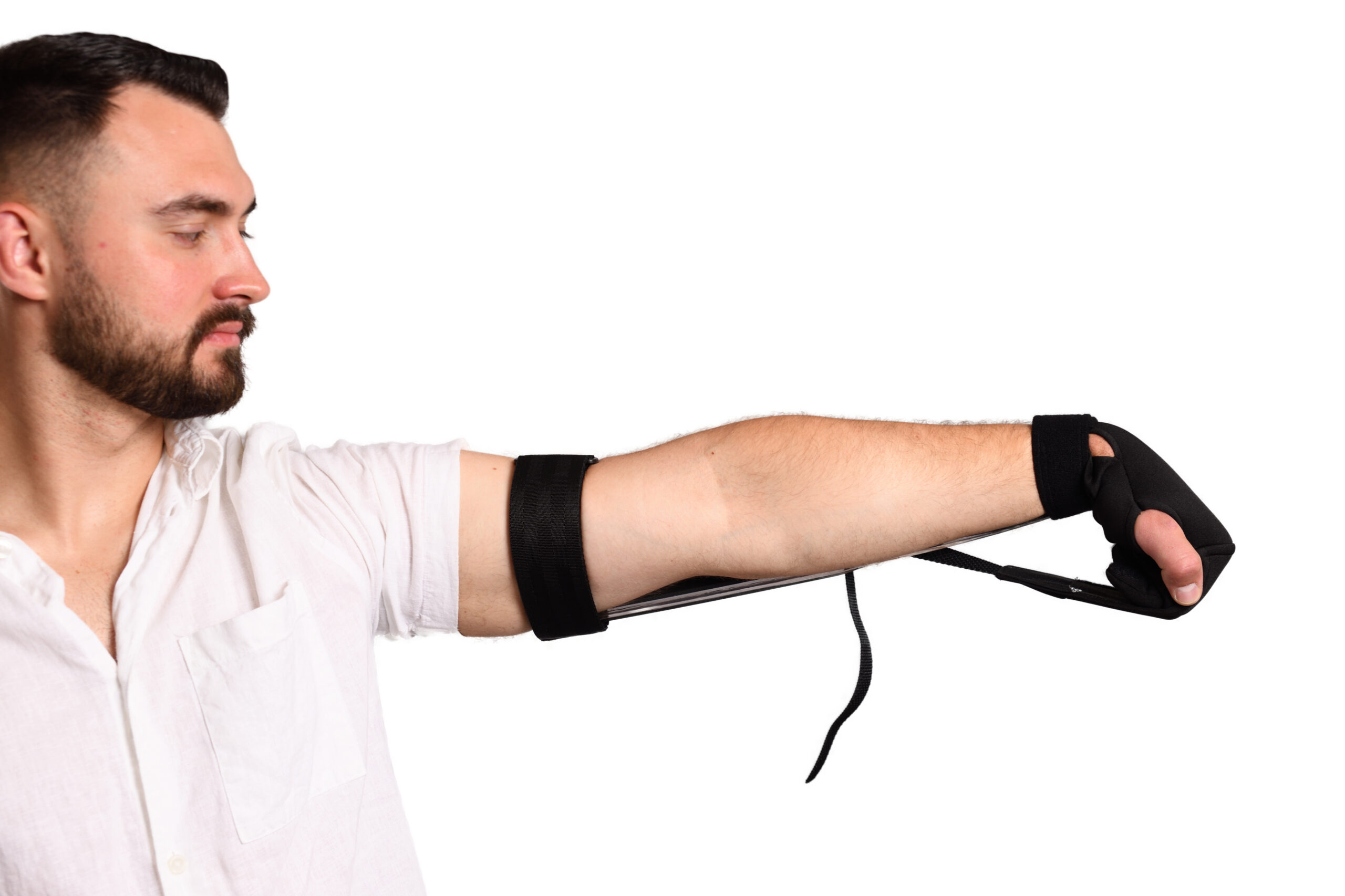
This is why activities like holding a mouse, gripping tools, typing, or carrying objects can sometimes aggravate the problem. Even if the larger blood vessels are still open, the smaller vessels inside the muscle can be compressed during sustained muscle contraction, which may make the tissue more sensitive and less able to recover. The pain may not come from one exact point alone, but from a larger area of irritated muscle and surrounding tissue. Repetitive Strain Tennis Elbow is where the ArmLock excels.
Detailed Medical explanation:
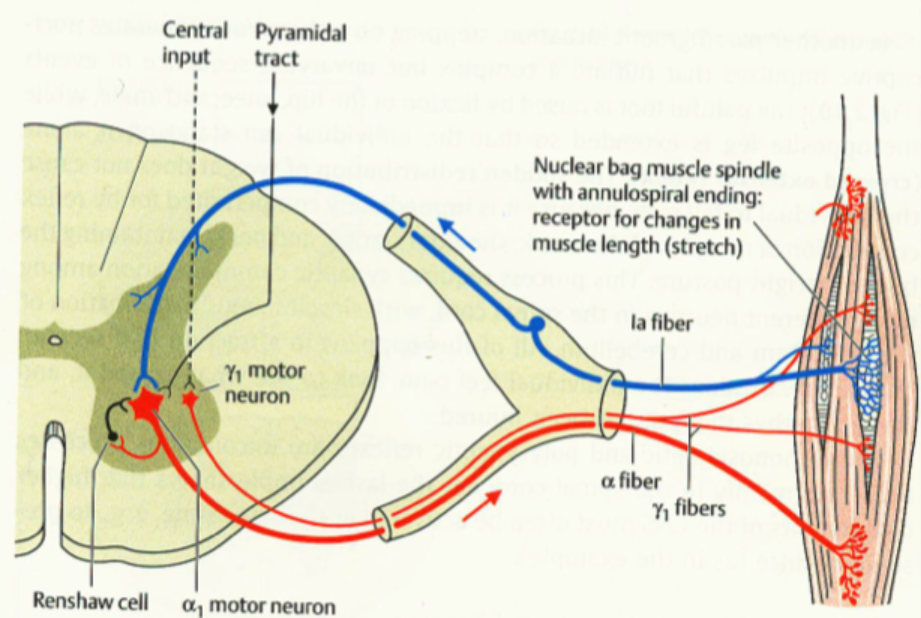
Trigger points within the muscles on the back of the forearm refer pain to the outside of the elbow. (1) Reduced oxygenation to the muscles may be a contributing factor to their creation. Isometric muscle contractions induce higher levels of muscle hypoxia, in comparison to isotonic muscle contractions. (2) In a study of rock climbers, near-Infrared spectroscopy revealed a clear, progressive decline in forearm muscle oxygenation over a 60-second static isometric gripping contraction. (3) In a study on quadriceps isometric contractions, the major arteries would not occlude, irrespective of the contraction intensity. (4) However, despite this continued flow through the major artery, local muscle oxygenation levels declined rapidly and considerably with the isometric contraction. In accordance with Laplace’s law, increasing intramuscular pressures disproportionately compress arterioles and the capillary network, thereby promoting tissue hypoxia during these sustained static contractions. Many occupations require these static muscle contractions which increase in intramuscular pressure, temporarily affecting the micro-circulation. Often, these static muscular contractions occur when the muscles are contracting at or near the inner range of the muscle. Statically holding fingers over a keyboard or a mouse, holding tools with the fingertips, grabbing and holding onto larger items with the fingers extended; all activities that involve a static contraction with the dorsal forearm musculature at inner range. At this inner range, there is maximum overlap actin and myosin molecules and maximum energy requirements. When calcium binds to troponin on the muscle fibers, the muscle fibers contract. For the release of this contraction, ATP is needed to actively pump calcium back into the sarcoplasmic reticulum. The increased demand for and reduced supply of ATP forms an ‘energy crisis’ within the muscle tissues, contributing to the creation of myofascial trigger points (MTrPs). As well, this hypoxic environment may evoke the release of neuro-reactive substances and metabolic byproducts which could sensitize peripheral nociceptors (5,6) Repetitive work involving isometric contractions, over the years, may contribute to more than just myofascial trigger points. Mechanical properties of the muscle containing MTrPs were quantitatively assessed by tracking the speed of an externally induced vibration as it propagates through tissue. This method is known as shear wave elastography. Using shear wave elastography, affected muscle in subjects with active MTrPs has been shown to be stiffer compared to palpably normal muscle (21). This lends further evidence towards an understanding that the source of pain may not just be from the trigger point. Pain may also stem from a more pervasive process that impacts the neighboring muscle and fascia. In the treatment of trigger points, Simons and Travell hypothesized the method of “spray and stretch” was effective because it targeted an “energy crisis” in the region of the MTrP. Stretching the muscles would lengthen the sarcomere and reduce overlap between actin and myosin molecules, decreasing the need for ATP and breaking the vicious cycle of the “energy crisis” (1). Simons and Travell were enthusiastic about this technique, calling it the “workhorse” of myofascial therapy. As the spray was found to be harmful for the ozone layer, this approach was abandoned. The current research on the ArmLock supports that a low load, prolonged stretch, may be an effective method of releasing these affected tissues associated with tennis elbow.