
Gentle, sustained stretching can help a muscle relax and become less sensitive to being pulled. Instead of triggering a quick protective reaction, a slow stretch over time can calm the muscle and reduce guarding. With regular use, this may help reduce pain and make movement feel easier and less threatening.
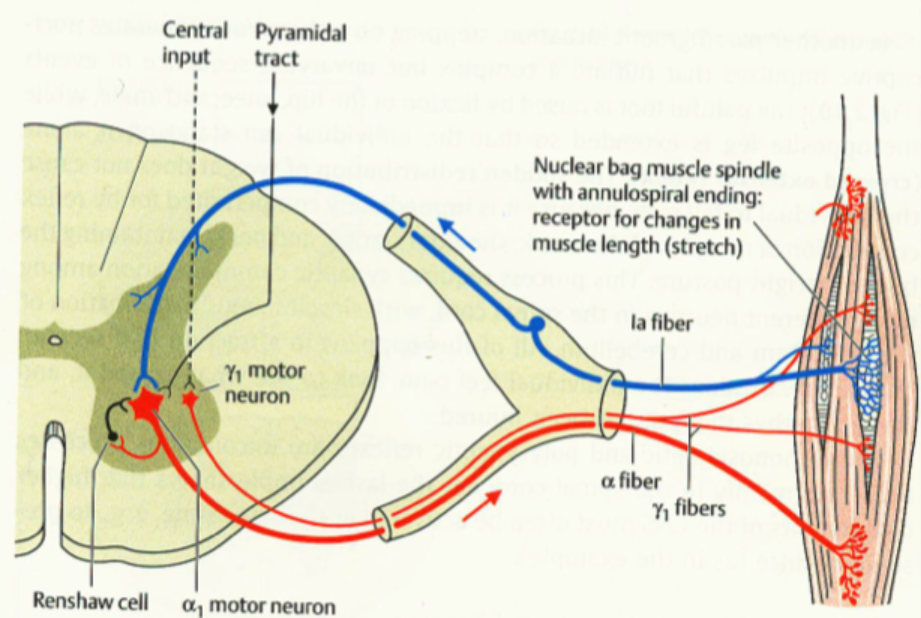
In medical terms, prolonged passive stretching, particularly when held for several minutes, has been shown to reduce the sensitivity of type Ia afferent fibers—key components in detecting dynamic changes in muscle length. These effects are time-dependent: longer stretch durations produce greater reductions in Ia-mediated reflex activity, leading to decreased stretch reflex excitability and lower force output. Importantly, these changes reflect spinal and supraspinal adaptations, supporting a model of central nervous system modulation rather than purely mechanical tissue elongation (12). Muscle spindles respond robustly to rapid stretch but far less to slow, sustained tension. Holding a muscle under low-load stretch for several minutes diminishes Ia afferent output, thereby reducing stretch reflex activity and involuntary muscle contraction. This results in decreased muscle guarding and tone, reduced perceived threat, and lower pain sensitivity. Sustained stretching also promotes viscoelastic lengthening (stress relaxation) without inducing micro-tears, shifting the muscle–tendon unit to a new resting tension baseline and further suppressing spindle firing. Collectively, these effects reduce nociceptive input to the spinal cord. When performed daily, such stretching may contribute to central downregulation of pain sensitivity, allowing the nervous system to “relearn” that tension is not inherently threatening.