
Science and Education

Learn about research studies and reviews done on the effectiveness of the ArmLock brace.
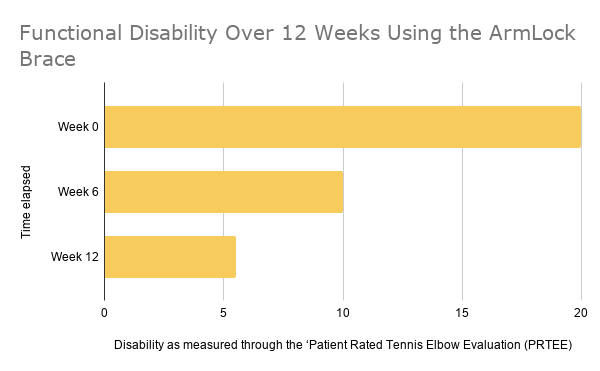
Evaluation of a Stretching Forearm Sleeve for Lateral Epicondylitis: Repeated Measures Study

Go into detail about the University of Alberta’s research study behind ArmLock’s pain and disability reduction stats.
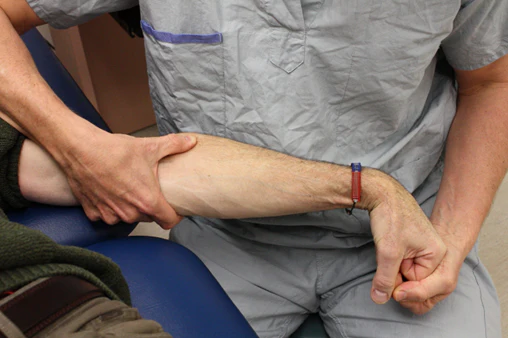
Research review of the ArmLock brace: A Therapeutic Stretching Tool for the Treatment of Chronic Tennis Elbow

Learn about the research behind why the ArmLock brace may help relieve tennis elbow by using a gentle, prolonged stretch.

Learn why the ArmLock’s stretch position is so effective, with a focus on the finger extensors and a controlled stretch.

Extensor carpi radialis brevis: An anatomical analysis of its origin

Prior teachings suggesting that overuse of the wrist extensor is the primary culprit of tennis elbow.
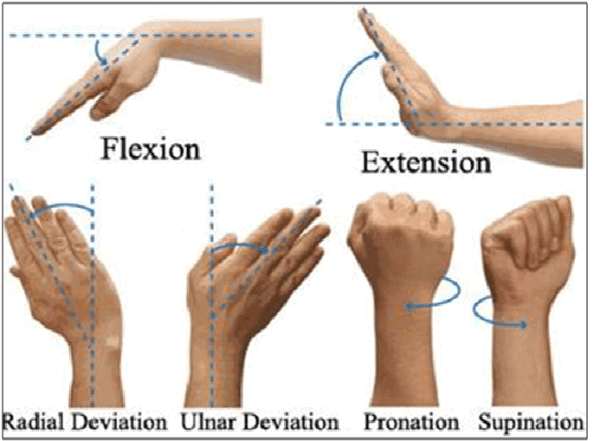
How muscle architecture and moment arms affect wrist flexion-extension moments

Read about the study that proves that finger extensors are crucial to the wrist extension moment potential.

Effect of simultaneous stretching of the wrist and finger extensors for lateral epicondylitis

This study found that the index and middle finger extensor tendons converge with the wrist, supporting the ArmLock technique’s need for the fingers to be tightened into a fist.

The role of the extensor digitorum communis muscle in lateral epicondylitis

This study of tennis elbow patients looked at pain on resisted extension of the middle finger which was found to be positive in a significant portion of the subjects.
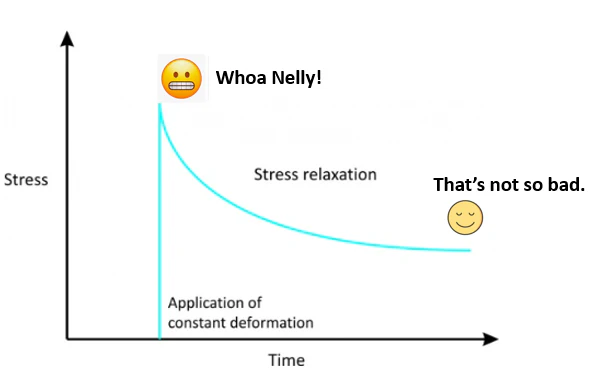
Tendon healing: Understanding Davis’s law

Davis’s law describes how tendons remodel in response to controlled tension, which supports the ArmLock technique’s application of low load tension over a longer period of time.

See what Mark Laurensse has to say about some scientific frequently-asked-questions.
How does a low-load, prolonged stretch affect pain?

Low-load, prolonged, and consistent stretching of tendons can lead to improved recovery.
Is there more than one kind of tennis elbow, and which kind is the ArmLock designed for?

Find out why treating the finger extensors works for tennis elbow.

Extensor carpi radialis brevis: An anatomical analysis of its origin

B. Greenbaum, J. Itamura, C. T. Vangsness, J. Tibone, R. Atkinson (1999)

We studied the origin of extensor carpi radialis brevis using 40 fresh frozen human cadaver specimens. Ten were stained with haematoxylin and eosin and trichrome which showed the collagenous structure of the extensor tendons at their origin. Gross anatomical observation showed that there was no definitive separation between brevis and communis at the osseotendinous junction. The histological findings confirmed the lack of separation between the two tendons. The extensor tendons were in close proximity to the joint capsule but trichrome staining showed no interdigitation of the tendon with the capsule. The validity of ascribing the pain of lateral epicondylitis to extensor carpi radialis brevis must be questioned. It appears to arise more from the ‘common extensor’ origin.

View original article →

How muscle architecture and moment arms affect wrist flexion-extension moments

Roger V. Gonzalez, Thomas S. Buchanant, Scott L. Delp (1997)

The purpose of this investigation was to determine how the moment arms and architecture of the wrist muscles influence their isometric moment-generating characteristics. A three-dimensional computer graphics model was developed that estimates the moment arms, maximum isometric forces, and maximum isometric flexion-extension moments generated by 15 muscles about the wrist over a range of wrist flexion angles. In combination with measurements of muscle strength, we used this model to answer three questions: (1) why is peak wrist flexion moment greater than peak extension moment, (2) why does flexion moment vary more with wrist flexion angle than does extension moment, and (3) why does flexion moment peak with the wrist in a flexed position? Analysis of the model revealed that the peak flexion moment is greater than the peak extension moment primarily because of the larger (110%) summed physiologic cross-sectional area of the flexors. The larger variation of flexion moment with flexion angle is caused mainly by greater variation of the moment arms of the major wrist flexors with flexion angle. The location of the peak flexion moment is determined by the wrist flexion moment arms (which tend to increase with wrist flexion) in combination with the force-length characteristics of these muscles.

View original article →

Effect of simultaneous stretching of the wrist and finger extensors for lateral epicondylitis: a gross anatomical study of the tendinous origins of the extensor carpi radialis brevis and extensor digitorum communis

R. Shirato, T. Wada, M. Aoki, K. Iba, K. Kanaya, M. Fujimiya, T. Yamashita (2015)

Pulling the wrist into flexion with the elbow in extension and forearm in pronation has been used as the stretching technique of wrist extensors for lateral epicondylitis. Simultaneous stretching of the fingers in addition to the wrist flexion has also been applied. However, the mechanism of this simultaneous stretching has not been clarified. This study is designed to clarify the mechanism underlying this simultaneous stretching technique based on the anatomical features of the origins of the extensor carpi radialis brevis (ECRB) and extensor digitorum communis (EDC).

View original article →

The role of the extensor digitorum communis muscle in lateral epicondylitis

S.M Fairbank, R.J Corett (2002)

A common finding in tennis elbow is pain in the region of the lateral epicondyle during resisted extension of the middle finger (Maudsley’s test). We hypothesized that the pain is due to disease in the extensor digitorum communis muscle, rather than to compression of the radial nerve or disease within extensor carpi radialis brevis. Thirteen human forearm specimens were examined. It was found that the extensor digitorum communis was separable into four parts. The part to the middle finger originated from the lateral epicondyle, but the muscle slips to the other fingers originated more distally. Pain ratings were measured in ten patients diagnosed with lateral epicondylitis during isometric finger and wrist extension tests. The results confirmed the high prevalence of a positive Maudsley’s test in lateral epicondylitis, and also that the patients with tenderness at the site of origin of the extensor digitorum communis slip to the middle finger had the greatest pain during middle finger extension. These anatomical and clinical findings clarify the anatomy of extensor digitorum communis, and suggest that this muscle forms the basis for the Maudsley’s test. The muscle may play a greater role in tennis elbow than previously appreciated.

View original article →

Evaluation of a Stretching Forearm Sleeve for Lateral Epicondylitis: Repeated Measures Study

A. Rincon, C. Guptill, A. Tran, R. Kamram, S. Alshammari, A. Cruz (2025)

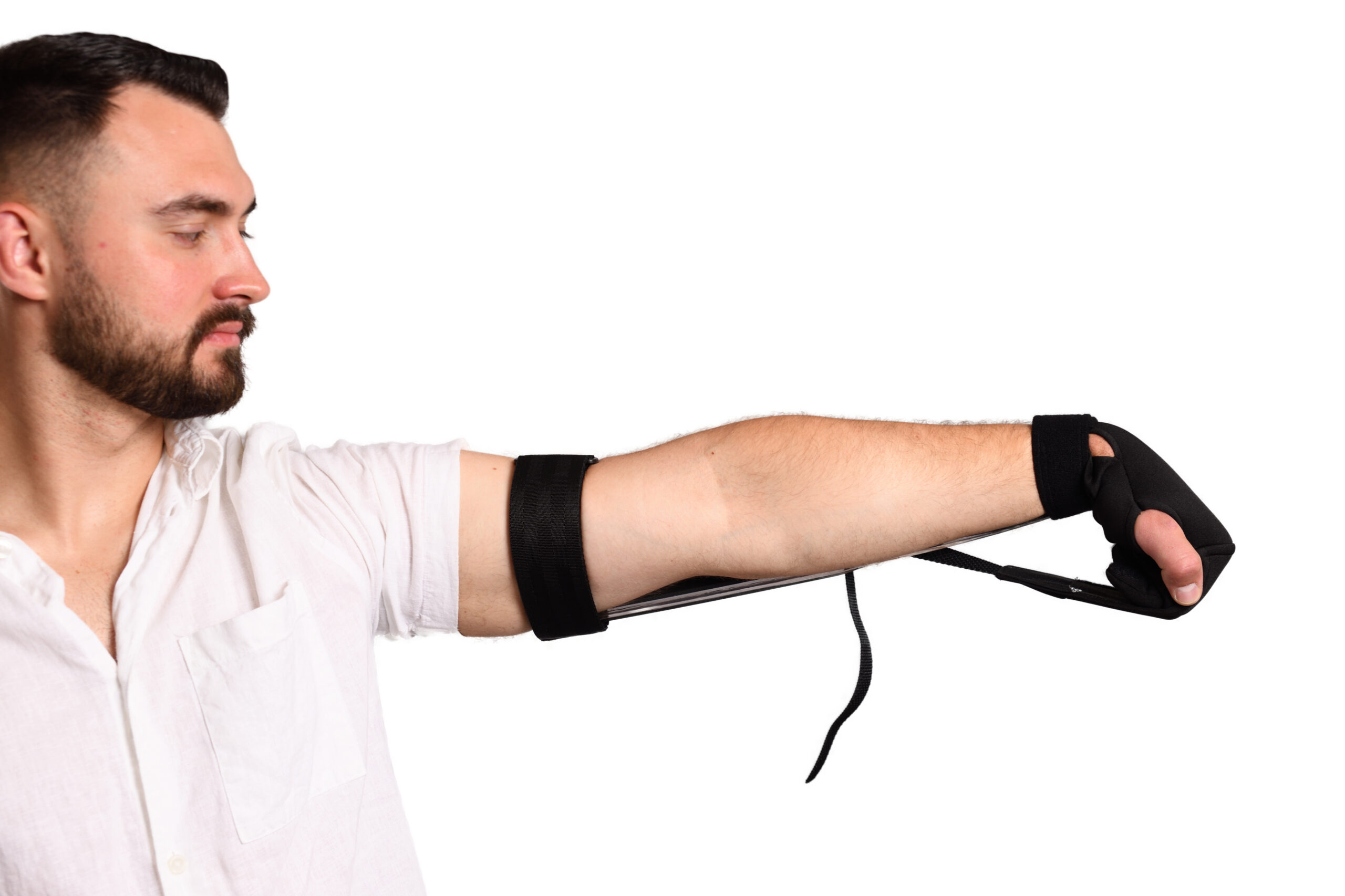
Lateral epicondylitis (LE) is a condition that impairs daily activities due to pain exacerbated by wrist and hand movements. The ArmLock sleeve is a novel, nonsurgical intervention to stretch the wrist extensor muscles by maintaining the elbow in extension, forearm in pronation, and wrist and fingers in flexion.

View original article →